
Blog
Our latest insights on education, assessments, and employability.
Workforce Pell: Connecting Short-Term Learning to Long-Term Opportunity
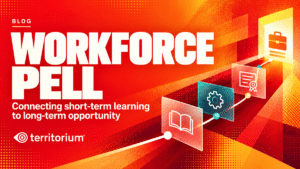
Workforce Pell represents an important expansion of opportunity for learners, institutions, employers, and states. By extending Pell Grant eligibility to qualifying short-term workforce programs, it creates new ways for people to gain skills that can help them move into high-skill, high-wage, and in-demand occupations without requiring them to begin with a traditional two- or four-year program. For colleges and workforce organizations, it also creates an opportunity to rethink how short-term education fits into a much larger learner journey.
That opportunity extends well beyond financial aid. Workforce Pell puts greater emphasis on the connection between learning, workforce demand, employment outcomes, and continued education. Institutions need to think not only about how learners enter short-term programs, but also about what happens after they complete them. The strongest Workforce Pell strategies will make it easier for learners to understand what they have learned, demonstrate the skills they have developed, carry their credentials with them, continue their education, and connect those accomplishments to employment.
This is where the real potential of Workforce Pell becomes clear. The infrastructure surrounding a short-term program can be just as important as the program itself.
Connecting learning to opportunity
Workforce Pell programs are designed around workforce relevance, which means institutions need strong connections between what they teach and what employers need. That connection becomes much clearer when learning can be expressed in terms of competencies and verified skills rather than relying only on course titles, certificates, or program names. A healthcare, cybersecurity, manufacturing, or construction program may tell an employer something about a learner’s background, but a clearer view of the competencies demonstrated within that program can tell them much more about what the learner is actually prepared to do.
Territorium helps institutions make those connections visible. Learning can be translated into verified skills, credentials, and Comprehensive Learner Records that provide a richer picture of an individual’s capabilities. Those records can then connect to career pathways and employment opportunities, giving learners a clearer line of sight between what they have learned and where those skills can take them. For institutions, this creates a stronger way to demonstrate how curriculum aligns with workforce needs. For employers, it provides more useful information about the capabilities of potential candidates.
The result is a much more connected model: learning leads to demonstrated competencies, competencies lead to verified skills and credentials, and those skills can be connected to occupations and employment opportunities.
Making short-term credentials part of a longer journey
One of the most important opportunities created by Workforce Pell is the ability to bring more learners into higher education through shorter, career-focused programs. But those programs do not have to exist separately from the rest of an institution’s educational offerings. They can become entry points into larger pathways.
A learner may begin with a short-term workforce program because it meets an immediate need. That same learner may later return for an additional credential, apply prior learning toward a certificate or degree, or continue building skills as their career evolves. When credentials and learning records are portable, the progress made during that initial program can continue to have value rather than disappearing into a disconnected system after completion.
Territorium supports this type of progression through Comprehensive Learner Records, Open Badges 3.0 credentials, digital wallets, and prior learning capabilities. Together, these tools allow learners to build a record that grows over time and reflects learning across multiple experiences. Instead of viewing a short-term credential as the endpoint of a program, institutions can make it part of a longer pathway that connects education, employment, and future advancement.
That changes the Workforce Pell journey from a simple sequence of enrollment and completion into something much more valuable: learning, skills, credentials, employment, continued education, and career advancement.
Helping learners use what they earn
Credentials are most valuable when learners can actually use them. Workforce Pell creates an opportunity for institutions to think beyond credential issuance and focus on how learners translate education into economic opportunity. That means helping learners understand how their skills relate to occupations, how their credentials communicate value to employers, and where their capabilities position them within the labor market.
Territorium’s LifeJourney platform helps connect verified skills and credentials to career exploration and employment opportunities. A learner’s record becomes more than a history of what they completed. It can become a tool for understanding what they know, where those capabilities are relevant, and what steps they can take next.
This creates a more continuous learner experience. Someone can learn a skill, demonstrate it, earn a credential, carry that credential with them, connect it to employment opportunities, and continue building on it over time. Education, credentialing, and employment no longer have to operate as separate stages supported by separate systems.
For institutions, that connection also reinforces the value of short-term workforce programs. The success of a program can increasingly be understood through the opportunities it creates for learners, not simply through the number of credentials issued.
Building stronger connections across states and systems
Workforce Pell also creates an opportunity at a much larger scale. States, higher education systems, workforce agencies, colleges, and employers all have an interest in understanding which programs prepare people for priority occupations and how education investments contribute to workforce development. When each organization operates with different systems, credential formats, skill definitions, and data structures, building that picture becomes difficult.
A more connected infrastructure can help bring those pieces together. Institutions can describe learning in terms of skills and competencies. Learners can maintain portable records of those accomplishments. Employers can better understand what credentials represent. Workforce systems can connect education and training opportunities to occupations and talent needs.
This is where Workforce Pell has the potential to support something larger than individual programs. It can help accelerate the development of statewide and regional talent ecosystems in which education, credentials, skills, and employment are more closely connected.
Territorium is built for that kind of environment. Its technology connects learner records, digital credentials, skills, career pathways, and employment opportunities across institutions and systems. The goal is not simply to digitize credentials or create another destination for job listings. It is to create the infrastructure that allows learning and opportunity to connect.
Turning short-term learning into long-term value
Workforce Pell creates a significant opportunity to expand access to education that is closely connected to employment and economic mobility. It also gives institutions and states an opportunity to build stronger pathways around that learning so that a short-term program becomes part of a much longer story.
Learners should be able to see what they have learned, demonstrate the skills they possess, carry their credentials with them, use those credentials in the labor market, and continue building on their education as their careers develop. Institutions should be able to show how their programs connect to workforce demand. Employers should have a clearer understanding of the capabilities represented by a credential.
When those connections exist, short-term learning can generate long-term value.
Workforce Pell expands access to short-term learning. Territorium connects that learning to skills, credentials, careers, and continued opportunity. Schedule a demo and learn more today!